Read Part I here
“IT ALL STARTS WITH A BIRTH CERTIFICATE.” – Barry Reid, The Paper Trip
Wife and mother Lori Erica Ruff, née Kennedy, committed suicide in her in-law’s driveway on the morning of Christmas Eve, 2010. She had always been guarded about her past, even forbidding her husband to go into a closet where she kept private, personal effects. After her death, her in-laws discovered what she’d been hiding; Lori wasn’t who she claimed she was, but her true identity remained a mystery. She had stolen the birth certificate of a little girl who died decades prior in an accident, and built herself a new life on that piece of paper without a trace of who she’d been beforehand.
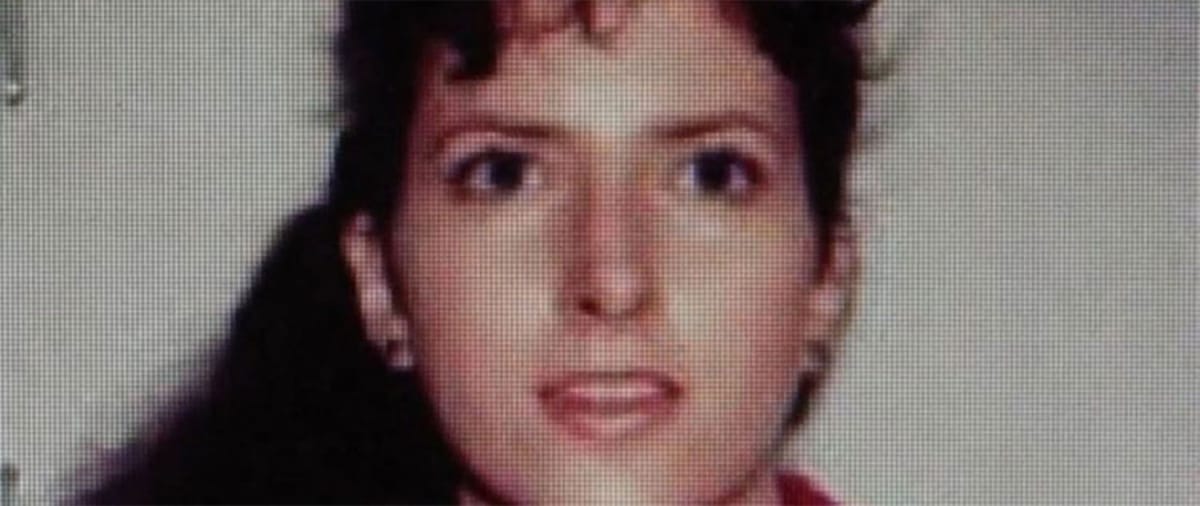
By now, a viral story, “She stole another’s identity, and took her secret to the grave. Who was she?” which ran on the front page of The Seattle Times and its website on June 22, 2013, has acquainted the world with the contents of Lori’s mystery cliffhanger strongbox, done up in whopping color photos. Alongside the Idahoan ID of “Becky Sue Turner,” which depicts Lori young, smiling, with hazel eyes slightly lifted in hope, relief or duper’s delight; the court document which announces, in fabric-ribbon type, “this Order shall constitute authority for the change of petitioner’s name from Becky Sue Turner to Lori Erica Kennedy;” and the birth certificate for the doomed toddler, the real Becky Sue—there were other odds and ends inside the box too.
Lori was saving a few keepsakes: two certificates for skydiving in Texas, and another for completing a tandem flight of a “powered parachute,” a considerable paraplane (not unlike the insurgent rigs that some Hamasites used to glide into Israel on October 7, 2023). Lori was holding on to some yellow pages ripped from an Arizonan phonebook as well, which gave the numbers of public schools. (Whereas she claimed to be from Scottsdale, “The West’s Most Western Town,” her GED, likewise in the box, was awarded by El Centro College of Texas.) Additionally, she had on file a letter of recommendation from one Roger Steinbeck—on Bangkok hotel stationery—undated—praising her work ethic and good manners while Lori had worked for him in no stated capacity.
The box contained (more) handwritten notes by Lori. One sheet is a collection of phrases, names, addresses and telephone numbers. In one corner, the scribbles read “402 months,” upside-down; next to them, going in another direction, more scribbles spell “N Holloyood [sic] police” and are circled. If you look a little lower, near the word “Records,” there is dashed off the contact info of “Ben Perkins Jr Law Offices.” And much farther down the page, upside-down again, three capitalized words hang along a phone number without an area code, “THESE EYES” and “SHOOT.”
Also among her secret things—adding to this evocative collage of noir and sleaze—were some old paystubs of Lori’s, traceable to a holding company for strip joints around Dallas.
Whoever else she’d been, whatever else she’d done, our friend Lori was an ace identity snatcher who had pulled off an old trick to spectacular effect.
It’s called the “dead baby scam,” or, depending on who you ask, the “dead baby method.” Think like someone desperate enough to become somebody else at any cost. A baby doesn’t have a credit score, a résumé, a little black book, a rap sheet or a LinkedIn page; he or she is an institutional origin point, clean, fresh, shiny. If you want such an enviable blank slate for yourself, you can’t convincingly swipe just any rugrat’s identity—you probably have too many teeth, for one thing. But a dead baby never accrued any of that biographical baggage either, and depending on the expiration date, he or she might be your age today, had the poor mite survived. Furthermore, that dead baby’s got proof of identity in the system that it ain’t using. Get yourself a dead baby’s birth certificate and you can pile on top of it all the clerical stationery from which a human life is truly made.
Such a capable piece of paper is, in the legalese, a “breeder document” because it can engender what bureaucracies will recognize as a person. “With this document [a birth certificate], issued by the government itself, one can obtain all the other forms of official ID,” to quote author Barry Reid (of whom more later). “Let the government do it for you!” he says. “They have to believe their own paper—and always will, too!!!”
The steps our impostrix followed to become “Lori Erica Kennedy” were risky and painstaking, yet unexpectedly simple. Investigators say that:
- first, on May 20, 1988, Jane Doe obtained Becky Sue Turner’s birth certificate (i.e., the breeder document) from Kern County, CA;
- second, on June 16 of that the same year, she received an ID card as Little Ms. B.S. in Boise, ID;
- third, on July 5—(a happy belated Independence Day to you, Lori)—she put “Turner” to bed and claimed the “Kennedy” cognominal in Dallas, TX;
- and fourth, most importantly, on July 12, she got a Social Security number under her changed name.
The very next day—Wednesday, July 13, 1988—“Lori Erica Kennedy” had herself a bona fide Texas ID card—and hey presto, Jane Doe is a whole new woman!
All told, it took her less than two months.
Whereas Jane Doe assumed the alias “Becky Sue Turner” out of practical necessity—it was literally on the paper—she chose to rechristen herself “Lori Erica Kennedy” after, apparently, nothing but her own personal taste. (And I’ve done my best not to deadname her on that score.) It goes without saying that, in many walks of life, for professional, social, artistic, religious and other reasons, there are rich traditions of renaming yourself; Steven Demetre Georgiou became Cat Stevens became Yusuf Islam; Theophrastus Bombast von Hohenheim became Paracelsus; and David Henry Thoreau became Henry David Thoreau.
A change of name can change your destiny. There is a Jewish custom, Shinnuy ha-Shem, in which the seriously ill are renamed in order to fool the Angel of Death. On the other hand, as the philosopher E.M. Cioran quips, “One always perishes by the self one assumes: to bear a name is to claim an exact mode of collapse.” Our Jane Doe’s choice of “Lori Erica Kennedy” should attract the attention of budding novelists and expecting mothers; Lori meaning “belaureled,” and Kennedy, “misshapen head.”
It’s still not clear how Lori knew about Becky Sue’s attractively short life. There is, of course, a black market for the identities of the deceased; the specific ghouls who peruse cemeteries (obits, too, and other records) for plausibly-revivable, decades-dead children even have a name, “tombstoners.” (And “to ghost someone” also means to steal a dead person’s identity!) Whether or not Lori worked with an identity broker of any kind, she seems to have benefited from expert guidance.
One resource that Lori might’ve used is a 28-page booklet, The Paper Trip, by Barry Reid, which his outfit, the Eden Press, first published in 1971. Originally, it was a DIY guide for would-be conscripts to become someone else—to keep their asses out of Vietnam—and was advertised in underground newspapers, going for five bucks by mail (over $40 in today’s money). But this antiwar lifehack swiftly found a broader audience—felons, bankrupts, drunk drivers, battered wives and others who needed a complete reincarnation on paper.
According to the judicial opinion in United States v. Barry Lee Reid, 634 F.2d 469 (9th Cir. 1980), Reid got his tips straight from the horse’s mouth, conducting some of his research by mail correspondence with a government agency, using a false name and credentials. Reid was a law student once upon a time, until smuggling wacky-tobaccy landed him in a low-security federal pen on Terminal Island, near Long Beach. And he was ultimately convicted of mail fraud as well (though not simply for lying to glowies by post).
“‘The Paper Trip,’ is more than a phrase or a book,” or so proclaims Reid in the introduction to the revised first edition. “It is an idea: The idea that bureaucratic America and personal freedom do not and cannot coexist.” Therefore, according to Reid,
The Paper Trip is thus a plan of attack. The bureaucracies are to be rooked and conned with their rules, but without their knowledge, into creating new identities. Paper Trippers will make servants of the bureaucrats, and become the rightful masters of their own lives. If freedom is to exist, we must all be free to be who we want to be.
For an artifact of 70’s West Coast radicalism, there is a defiant libertarian ring to “paper tripping” that even the likes of Alex Jones can grok.
Reid’s vision of “personal freedom” has attracted its share of eccentrics. Paralleling Lori’s story, there was an Ohio paper tripper who lived under the name Joseph Newton Chandler III, which he picked off a dead kid, and also went undiscovered, for decades, until he shot himself. And like Lori, Chandler’s behavior puzzled the few who got to know him. He once drove from Ohio to Maine—half a day of travel—because he wanted to go to an L.L.Bean, but when Chandler couldn’t find a parking spot at one location, he turned around and went straight home without setting foot in the store. Perhaps he wasn’t so strange. On another occasion, Chandler showed up at a hospital having badly broken his skin while using a vacuum cleaner to masturbate—and any guy who’s been lonely enough has felt his pain. At the time of his suicide in 2002, Chandler was elderly and battling colon cancer. A search for his next-of-kin—the old coot had $80K in the bank—unearthed the fact that the real Joseph Newton Chandler III had died in 1945, at the age of eight, in a head-on collision which had wiped out his parents too. The man who stole Chandler’s identity retrieved the boy’s birth certificate in 1978 and, it seems, didn’t exist prior to that request. In this case, investigators were left with nothing like a strongbox to go on, having damaged the fraudster’s home computer by accident…
In The Paper Trip, Reid describes the dead baby method and various routes to fulfilling it in accessible, unmysterious prose. And Lori Ruff seems to have studied it closely. Under the header “Old Newspaper Method,” for example, Reid writes,
Choose a year in which you would have been no older than ten and begin looking for articles [rendered on microfilm] in which a young child of your sex, race, and present age (then) was killed in some kind of accident like fire, auto, or drowning.
Becky Sue was, in fact, only a year Lori’s junior. Check. The poor thing died in exactly one of the above disasters. Check. Furthermore, she was born in Bakersfield, CA, and incinerated in Fife, WA. According to Reid, this combination is highly desirable for a paper tripper. (Likewise, Joey Chandler was born in Buffalo, NY, and smashed near Sherman, TX.) Reid explains that
by using the birth certificate of someone who was born in one county but died in another county, or state, you have assured yourself of undetectability. It would take thousands of man hours to track down the death certificate, and no agency is going to bother.
Nowadays, computer systems can perform the work which would take “thousands of man hours” in seconds, like matching the birth and death certificates for one individual. Lucky for her, Lori had taken her paper trip before digital records and internet use were common.
The exact way Lori bagged Becky’s birth booty isn’t known; but hidden in every city hall, found at one end or the other of a dangerous old spiral staircase, there’s a mildewy office, the archives, staffed by a lonesome clerk who shambles about the dusty stacks on spider-bitten legs and is starved for human contact or for something to do. The occasional phone call from an exasperated, grunting detective is usually the only chance these devoted public servants get at either. So, imagine the excitement when one of them gets a walk-in with a request to pull some documents: You said you were born in July of ’69, sweetheart? I know right where that box is—just give me a minute to get the step ladder. Help yourself to the candy dish, Becky. Is this for school?
Lori didn’t need to steal or fabricate a Social Security number, which would’ve been a whole other con. Having done the hard stuff already, she got hers with a little deceit and good timing. The assignment of SSNs to newborns, that is, “Enumeration at Birth,” began in 1987; the following year, that of Lori’s paper trip, it was still the custom for young people to hit up the nearest Social Security office for a number before they started their first adult job. Maybe Lori was young or she just looked the part, but to snag a social, all she had to do was present “her” ID as Becky Sue.
Because of the Full Faith and Credit Clause of the U.S. Constitution, each state has to respect the records of another state. A birth certificate from California brought about an ID card from Idaho, and both supported a name change in Texas and then an SSN. Each step that Lori took to fabricate a new identity, in each different place, made her paperwork magic harder and harder for potential snoops to follow.
She broke the law, clearly. But which? Lori is commonly branded an identity thief, but “identity theft” as such wasn’t federally codified until the Identity Theft and Assumption Deterrence Act (ITADA), which went on the books in 1998, a decade after her paper trip. (Meanwhile, the first attempt to explicitly tackle identity theft at the state level wasn’t that much earlier, starting in Arizona, 1996.) Of course, crimes like Lori’s were prosecutable in the 80’s, albeit under dated “criminal impersonation” or “false personation” laws from the 19th century in conjunction with other fraud statutes, enforced higgledy-piggledy under various jurisdictions and by different agencies.
Until the ITADA, rather than private citizens whose “personal identifying information” was stolen, the law assumed the victims of such crimes were actually the creditors whom thieves exploited with that information. Institutions like banks and credit card companies can write off losses caused by identity theft or pass them onto consumers, so they preferred to forgo the extra expense of prosecution, which emboldened the thieves. A private citizen had to reclaim his identity, salvage his credit score and fend off debt collectors with little to no legal recourse while the thief skipped along to his next target. The ITADA acknowledged the compensability of individuals so injured and made identity theft the serious offense we now recognize it to be. That said, Lori was hardly leaving a little dead girl holding the bag for a lot of frivolous luxury splurges. Her “victim” was, in effect, the bureaucracies which she manipulated to her own ends.
In September 2011, Special Agent Joe Velling of the Social Security Administration Office of the Inspector General became involved in Lori’s case. “It’s about the integrity of the Social Security number,” Agent Velling told a reporter for The Seattle Times. “If we don’t defend that…” he warned, trailing off. One wonders what he thinks of the SSA’s currently suspended “Enumeration Beyond Entry” program which, in 2024 alone, put two million migrants to work in the US with their own numbers, no additional paperwork, no in-person appointments. (By the way, the program started under Trump’s first term.)
Velling was debriefed on Lori’s case, alongside the Inspector General himself, by a congressman who previously served on the House Intelligence Committee. Agent Joe happened to be in D.C., meeting with the IG on a matter concerning veterans, when they were urgently called into the congressman’s office. There, Velling was presented with a scrapbook of contents from the mystery cliffhanger strongbox. A close family friend of Lori’s in-laws, the congressman wanted to personally bring the disturbing situation to the IG’s attention. Justice is blind, but it still likes Christmas cards.
Velling later told The Seattle Times, “My immediate reaction was, I’ll crack this pretty quickly.”
Not so. Though Velling had many years of experience untangling identity thefts and busting wrongdoers, Lori proved to be a cannier crook than he expected. Every seeming clue came to a dead end.
“402 months” as per her notes, for example, might refer to jail time that she was evading—prison sentences are usually given in months, not years. However, 402 months is approximately 34 years behind bars, for which dire sentence Lori would’ve had to commit a heinous crime. If she were such a fugitive from justice—an armed robber, a druglord, a serial kidnapper, a hatchet-happy rapist—then her face and prints would be in the system, plus a conviction, and the authorities, already snapping at her heels.
But Velling passed around her face and prints to various agencies for matches, including the FBI and Homeland Security, even the military. Zilch.
He ran samples of her DNA through different databases. Zippo.
Velling rang up Ben Perkins, Jr. whom Lori mentioned in her notes. Another cul-de-sac. He turned out to be an African-American lawyer, and when he was a practicing attorney he marketed to minority clients. Perkins told Velling he didn’t remember a woman named Becky Turner or Lori Kennedy. Furthermore, he claimed that he never had a white client in his whole career. (Perkins was disbarred in 1989 for client neglect.) Another potential contact, her alleged employer Roger Steinbeck, was unavailable for comment, although that was because, as far as Special Agent Velling could determine, the fast-moving minx had simply made him up. The other contacts she listed in her notes—one was a Los Angeles makeup artist—didn’t know her from Eve.
Velling did get hold of a man who dated Lori in the 90’s; she’d put him down as a reference on a student aid application. But Lori’s ex had no new insight or direction to offer the case. She had given him the same sob story—she was an orphan, the last fruit of a felled family tree.
The man mentioned it was a brief relationship. He also told Velling why he broke it off: He realized her emotional issues were far, far hairier than what he was willing to handle. The last he’d heard of her, Lori was wiggling around a “gentleman’s club” in the Dallas area (presumably under still another name) but this lead, too, went nowhere.
From her medical records, Velling discovered the unlikely ecdysiast had gotten a boobjob. Because breast implants come with serial numbers, Agent Joe hoped to follow the bouncing bosoms to doctors’ notes which might prove more revealing than Lori’s whilom act, but she stymied him again. She’d waited until she was “Lori Erica Kennedy” before she went under the knife.
Joe Velling questioned how Lori had known about a little girl’s tragic death in Washington State. Perhaps she’d been familiar with the family. On that hunch, he visited the real Becky Sue’s mother in Puyallup, Washington, and showed Lori’s Idaho ID card to her; he had a policeman do the same for Mr. Turner at his home in Hilo, Hawaii. Neither of them recognized the smiley young thing going by their long-dead daughter’s name in the picture.
However, Lori probably didn’t start her identity shenanigans close to home; it stood to reason she wasn’t a native of California, Idaho or Texas. One of the phone numbers she had jotted down in her notes belonged to a library outside of Philadelphia, which blew open the zone of interest toward the eastern seaboard too.
In November 2012, Velling called Maureen O’Hagan, then a staff reporter for The Seattle Times, and offered her the scoop. He wanted to get Lori’s face on the front page of a major paper and across the web where she might be recognized by somebody who knew the truth. The following summer, in June 2013, O’Hagan broke the full story—an unidentified criminal, a deceived widower, a motherless child, rattled in-laws, dead baby scams and a mystery cliffhanger strongbox: “She stole another’s identity, and took her secret to the grave. Who was she?”
It was almost two and a half years after Lori’s death, but the question remained. There wasn’t a single hole in the homespun invisibility cloak under which Lori had smothered her past.
“Can you tell how frustrating this is?” Velling told O’Hagan. “The reason I can’t find anything prior to 1988 is because she’s very good.”
Neither Maureen O’Hagan nor Joe Velling, whom she interviewed extensively, mentions The Paper Trip even once—not in her special report for The Seattle Times; not in the Amazon Kindle spinoff, The Woman in the Strongbox (2018). But to date, the Eden Press is still selling it, now all five volumes of it, on their website.
-- Fletcher Peppers