I was wrong. I knew I was wrong, and yet I persisted. — Jack Black
I’d been looking forward to Sunday since Monday.
Seated along the wall of a courtyard filled with sky, I waited for my coffee.
The rundown manor house had been converted into a botanical nursery with an espresso machine in one of the rooms adjoining the courtyard.
She walked into that interval between expectation and fulfillment, ordered, returned, and realized all the tables were occupied, and most of the seats.
I caught her eye, such a funny expression. I said she was welcome to share my table. She asked me if I was sure. I said of course I’m sure.
Overtop her t-shirt a large silk blouse with patches of violet, with splashes of turquoise and salmon pink, the pink of their meat. Her denim shorts were very short and tight and her thick-soled leather boots had chrome buckles.
I tried to think that I didn’t want to fuck her. I’m being a nice guy, I told myself. I sat there telling myself I was a good boy.
Her t-shirt was silkscreened with the 1895 lithograph of Edvard Munch’s The Scream, and as she settled at what was now our table, she reminded me a lot of Kyoko Koizumi when Koizumi was in her 20s. It couldn’t have been her, though. The famous singer was now in her late-50s.
Tea and a warm croissant arrived for her. She put on a pair of glasses and took a small tablet out of her purse.
I said that was an interesting picture on her t-shirt. She said it was Edvard Munch. I said I know. A lot has accumulated around that picture, I said.
She set her tablet on the table, tried her tea, crossed her legs, uncrossed her arms, like someone who was ready to listen.
I’m not an expert on it, I said, but I’ve done the odd deep dive, mainly online. For me it always comes back to Pål Enger. I could tell she didn’t know who that was.
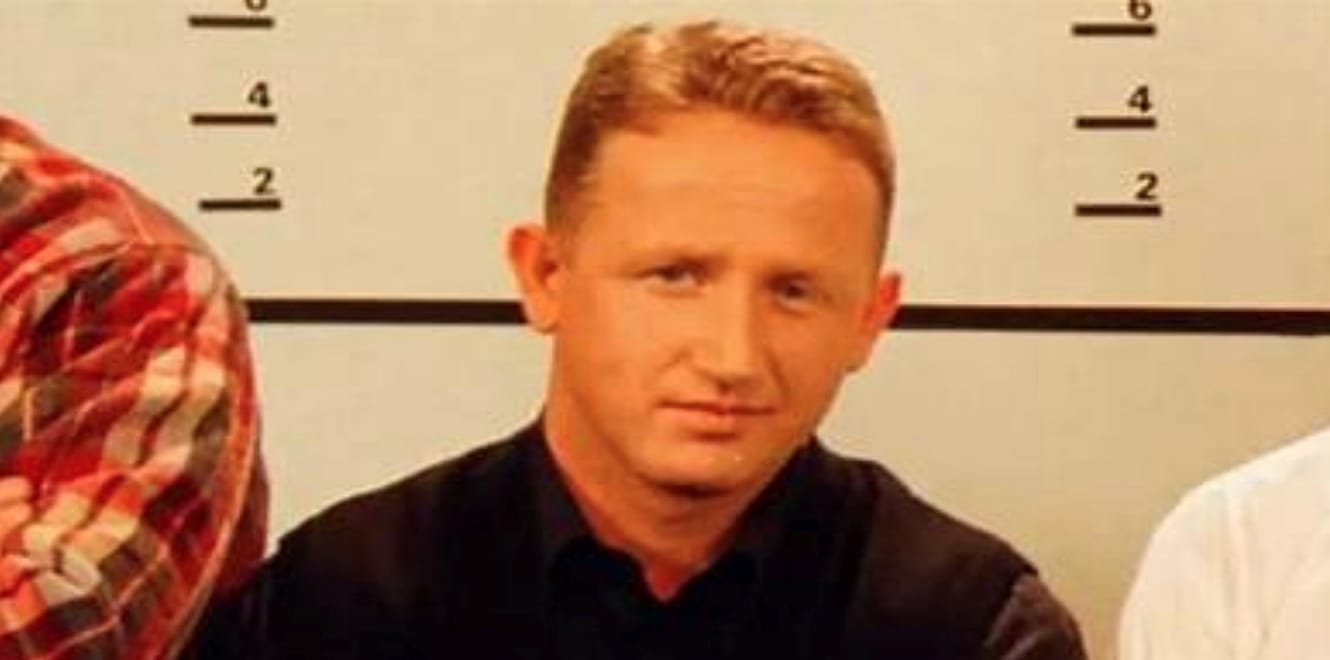
Enger was raised in Oslo, in an area called Tveita, where crime reigned. On a trip to the National Gallery as a boy, he viewed The Scream for the first time. In the painting’s tormented figure he saw himself cowering from his abusive stepfather — I paused — the young woman muttered something in Japanese and kept listening.
Enger returned to the museum twice weekly after that, I said, so he could reflect on Munch’s picture, returned to something that came from inside him.
Meanwhile he led a double life.
He was a talented footballer. In the late-1980s he played professionally in the Eliteserien league for Vålerenga. According to Dag Vestlund, the team’s manager, Enger was small, tough and quick. Off the pitch he was modest and mannerly.
He was dedicated to another vocation since childhood. Inspired by The Godfather, shoplifting candy led to robbing jewelry stores and blowing up cash machines. There was a subway from Tveita into the city, but Enger would steal a Porsche and drive.
I cooled my throat with sparkling water.
Enger loved the picture very much, the real one, I said, not the lithographed version, not the countless mechanical reproductions — the actual only painting.
A conviction quietly rose within him that he, rather than the Nasjonalmuseet, should have Munch’s picture.
As much as he was drawn to it, it was drawn to him.
If he was going to have it, he’d need to steal it, and that’s what he decided to do, I said. He convinced his friend Bjørn Grytdal to help, but they broke the wrong window.
After gaining access to the museum they found themselves face-to-face not with Munch’s The Scream but with Munch’s Love and Pain. They stole that instead.
Enger was crestfallen. Grytdal lost his nerve and confided in a friend who snitched. Love and Pain was hanging on Enger’s wall when the police stormed his home.
He served 4 years in Ullersmo Prison and was released in 1992. Enger thought of himself as a regular criminal before he had gone away, I said. When he got out he considered himself a master.
The other prisoners at Ullersmo called him The Asking Man because he would often wonder how certain illicit things were done and gain information that way.
The shade was moving away from her attentive face, her attractive face.
The light picked out tiny circles in her glasses where the temple bars met the frames.
I realized she was filming me. I allowed it. I had shaved that morning, my hair had been recently cut. I ordered another espresso.
Did she know what was going on in Norway on February 12th, 1994?
She did not.
The Winter Olympics, I said.
The opening ceremony was taking place in Lillehammer, I said.
Law enforcement had been reallocated to secure the international event.
Enger knew the exact window to smash now.
This time he enlisted William Aasheim, a homeless man, to assist in the burglary. They raised a ladder up to the window and shattered it.
In less than 2 minutes he located The Scream, took it off the wall, penned a short note.
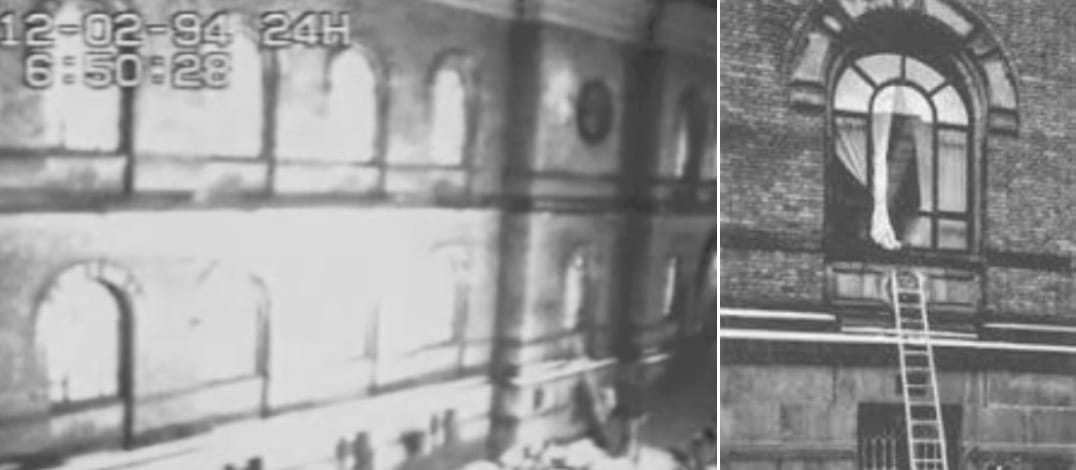
“Thank you for the bad security.”
Enger’s first son was born a few weeks later. He used it as an opportunity to toy with the police. He purchased advertising space in a newspaper and announced that his son Oscar had come into the world “with a scream.”
He delighted having The Scream. Because of his past he was a prime suspect. He’d have to get rid of the picture.
The art dealer Einar-Tore Ulving thought he could fence the painting.
There was a buyer. The gentleman claimed to work in acquisitions for the Getty Museum in Los Angeles. Enger and Ulving ignored this red flag.
The buyer was Charley Hill, an undercover Scotland Yard detective.
Munch’s picture was worth $150 million. Ulving was asking $400 thousand. He and Hill quickly agreed on a price.
They drove to a small village south of Oslo called Åsgårdstrand. Edvard Munch spent many summers here and painted a number of his masterpieces, including phases of The Scream, now stashed in a cellar somewhere in this same village.
Before their meeting Hill called in a sting and Ulving was arrested.
Enger must have heard about the bust, I said, smiling. With his son Oscar in a baby sling and his gun tucked into the baby sling he jumped in his car and fled.
The police arrested him at a gas station shortly after, I said.
She excused herself, then returned with another bottle of sparkling water and two fresh glasses.
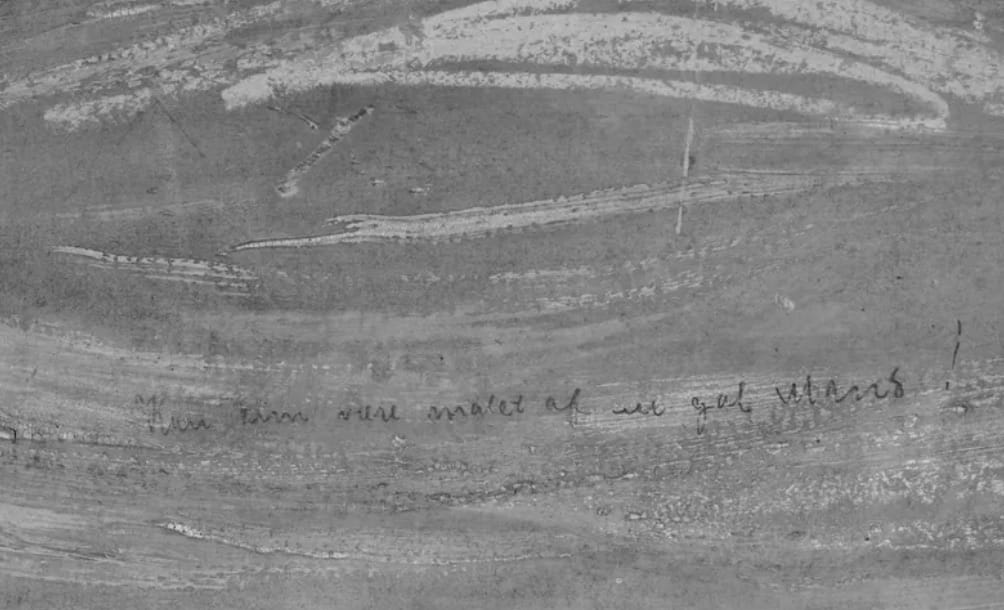
So fond of little notes, I said, it makes me wonder if Enger was aware of the message written in graphite on the canvas of Munch’s painting: “Kan kun være malet af en gal Mand!”
In English it means: “Could only have been painted by a madman!”
Since its discovery in 1904 at an exhibition in Copenhagen, the phrase was thought to be the work of a vandal, possibly a disgruntled critic.
Munch had his share. In 1895 he showed the painting for the first time in Norway at Oslo’s Blomqvist gallery. After seeing the picture, Henrik Grosch declared that one could “no longer consider Munch a serious man with a normal brain.”
Amid a number of other negative reviews, the question of Munch’s mental health was debated publicly. It troubled him, as certain entries in his diary suggest.
Some believed that Munch inscribed the line.
The sparkling water tickled my nose.
In 2021 the picture was restored. National Museum staff used infrared photography to inspect the paint, including the inscription.
The infrared light made certain details of the handwriting more identifiable.
The conservators were partly convinced of the inscription’s provenance because the writing was small. Wouldn’t a vandal have wanted their message to be large and obvious?
They also compared the inscription with other samples of Munch’s handwriting. The N and D in the inscription matched Munch’s very own N and D, such as the famous line in his diary: “I sensed an infinite scream passing through nature.”
Did this “infinite scream passing through nature” move Enger? Did he identify with this sublime experience? Possibly, I said to her, who concealed a yawn.
Possibly — but haven’t a great many people identified with that eternal howl, judging by the universal popularity of the image?
Maybe Pål Enger looked at the painting during one of his recurring visits to the National Museum, saw the message, parsed the message, and “Could only have been painted by a madman!” was changed in his mind to Can only be stolen by a madman.
I already suggested that the scream came from inside him. It voiced a desire to transgress.
Enger had a mania for crime, he was a crime-committing addict, I said. It would be safe to call him a recidivist. Throughout his life he was repeatedly convicted of traffic, profiteering and drug offences.
I cleared my throat.
In 1999 he escaped from a minimum security prison and gave media interviews on the lam.
While embarking on a so-called art career of his own, he was arrested in 2015 for the theft of 17 paintings from the Fine Art Gallery in Oslo because he left his wallet at the scene of the crime.
By this time an aura of infamy surrounded his name. In due course a documentary film was made about him and released in 2023, which I haven’t seen.
Enger died in Oslo on June 29th, 2024. His coffin drape was an image based on The Scream.
Again I cleared my throat.
In the corner of my eye a fat bumblebee lighted on the cushion of a flower.
I excused myself to use the restroom.
When I returned she had gathered all her things. The saucers, empty cups, glassware and stirring spoons were stacked and arranged neatly. In careful, imperfect English she thanked me.
It crossed my mind to ask her to lunch but judging by the sudden coolness of her manner and her readiness to go, I felt this would be a non-starter.
Then, in all seriousness, she asked me if she could use my story for a school project. She was a student at the Tokyo University of the Arts.
Her guilty reaction to my stern look said she knew that I knew what she had done.
Of course you can, I said. The story’s been told over and over. It belongs to everyone.
-- Dustin Cole is the author of two novels, Notice (Nightwood Editions, 2020) and Run the Bead (Soyos Books, 2023), as well as the poetry collection After Sunstone (Farthest Heaven, 2025).