Our contemporary age is an age of metaphorical inflation. Where the “Apollonian” (orderly, rational, restrained, and form-driven) signs, symbols, words, ideas, and representations become so broad and widely defining that when a representation is so widely removed from its intended, ineffable phenomenon, the value and meaning of the representation plummet. The representation itself becomes more than just a representation; it is instead a tool used to shape social happenings and manufacture behavior. How effective can a liberal democracy be - the respective beliefs that citizens are independent, rational actors who gather information, debate in the public square, and cast votes based on their own free will - or even a social democracy, when the mind is for rent? This collapse, of course, results in a persistent anomie, due to the loss of what was once seen as a “given” reality, without the need to diffuse into a seemingly infinite array of classifications and systematizations that collapse under their own weight. Metaphorical inflation generally sanitizes and flattens the raw, ineffable reality of instincts and drives. It avoids the chthonic phenomenon in favor of the conceptual “thing in itself.”
Even in pop-culture fiction, messages that resonate but are attempted to be reined in nevertheless often land. Fiction such as Fight Club, Trainspotting, and Videodrome exposes the contemporary condition, often before the anomie of today was a particularly poignant thing to discuss.
The omnidirectional gaze and perspectivism
We never perceive the full truth of ourselves or the world around us directly. We can only see the world through our own gaze on ourselves and our environment, and through the gaze of others as it is communicated to us. The language and symbols used as intermediaries of communication are constructed by external powers, and even our own interpretation of these representations is never in perfect alignment with others’ interpretations. No label or symbol, even in proliferation, can ever fully encapsulate the reality, meaning, and truth of a phenomenon; it is something ineffable. Nevertheless, words and representations are useful insofar as they communicate basic understandings of things, which, while not objective, are necessary for cooperation and even simple community. Often, metaphorical inflation that accompanies the omnidirectional gaze stems from equating the representation with the represented, a process known as reification, and separation from the expectation that representation can fully encapsulate a thing: “The thing in itself.”
The notion of perspectivism and how perspective shapes meaning was built upon and established largely within the works of Friedrich Nietzsche and has been used and abused ever since, often to the point where they rather ironically loop back into the “thing in itself,” ungrounded in an immediate phenomenon, within works such as those of thinkers like Foucault or Butler. Certain post-structural ideas like the “panopticon” and “hyperreality” from Baudrillard are generally correct. Still, themselves are trapped in metaphor and the discursive, and are not particularly original, and often implicit in the works of previous thinkers, like Nietzsche, which they claim intellectual heritage of, but neglect concepts such as “There is More Wisdom in your Body than in your Deepest Philosophy” which the post-structuralists almost treat the body as secondary to discourse and representation, landing them in the realm of idealism. They believe themselves to be subversives, but they have no idea what they are subverting.
Money/commodities
It should be no surprise that one of the most obvious examples of metaphorical inflation is the economic or fiscal inflation of money. The U.S. dollar, for instance, hasn't been anything even close to a chthonic reality since 1971, when “Tricky Dick” Nixon took the United States’ money supply off the gold standard, where the dollar became nothing more than a ritualized exchange of a self-referential symbolic note, not really worth any more in reality in terms of use than the very paper it’s printed on. Today, money exists primarily in the space of the Ideal, self-referential Numbers accounting for self-referential debts and Assets. Money more so exists as a performance over any True transfer of value in any material sense of the word. One could even make the argument that the gold standard is also self-referential in the sense that Gold as idle material is effectively useless until that Gold is mixed with transformative measures such as production into goods to be used. Which by themselves are capable of self-referentiality. As labor is not in itself valuable, and neither is consumption. It is only valuable insofar as its users' intent or will, which does not necessarily have a rational “why?” behind it. Popular culture generally itself designates in particular what the consumptive habits of the individual signify in terms of the value and meaning of those habits as well. Consumption is not merely a means of survival to consume calories and so on, but an outward projection of social messaging as to what a commodity says about the individual consumer and the proverbial baggage that entails to others. It categorizes them beyond themselves. The present and hopefully not the future looks like watching VR pornography with an “autoblow,” eating Uber Eats while behind the wheel of their self-driving Tesla - which isn't even much of an exaggeration. It’s the triumph of the “last man”; the flies of the market believe they have “invented happiness.”
Within the film and novel Fight Club, consumerism is explored through the eyes of a dissident corporate drone who eventually, without entirely his consent, throws off the yoke of everyday monotony and ceases to be a “copy of a copy,” through the unconscious creation of his alter-ego Tyler Durden. In Trainspotting, Mark Renton, a heroin junkie, sees his way of life - albeit entirely self-destructive as an alternative to the “choose life” messaging of 1990s Britain. Equating such messaging with the hollow life of consumption in “Choose a job. Choose a career. Choose a family. Choose a fucking big television. Choose washing machines, cars, compact disc players and electrical tin openers... Choose DSY and wondering who the fuck you are on a Sunday morning. Choose sitting on that couch watching mind-numbing, spirit-crushing game shows, stuffing junk food into your mouth. Choose rotting away at the end of it all, pishing your last in a miserable home, nothing more than an embarrassment to the selfish, fucked up brats you spawned to replace yourself, choose your future. Choose life... But why would I want to do a thing like that?”
The State and Politics
The state is the name of the coldest of all cold monsters. Coldly it tells lies too; and this lie crawls from its mouth: I, the state, am the people. - Nietzsche
Politics and the state are, of course, major sources of the use, abuse, and manufacture of metaphorical inflation. The state itself, within Western representative governments and governments modeled after it, claims to be a “representative” of the people of the nations it governs, duly elected by the people. But what people? More often than not, these people are very much detached from their constituents. Not just detached in the sense of socio-economic class, but quite literally detached from the everyday ontology of the people they claim to represent. The term “represent” here only seems to represent itself; therefore, it collapses, where these self-referential figures stand as a separate cohort of people from their sentiment of being brought into power by their constituents. This is particularly effective in how the perception of candidates is engineered towards some intended end; this is not unique to any particular party or candidate but is a problem with ideological alignment and the notion of representative politics as a whole. You do not necessarily need to rig an election when the very minds doing the actual voting are themselves controlled. Even those criticizing an election or politics in general are themselves prejudiced towards a particular bias; while prejudiced, there is a distinction to be made between dogmatic totalization - claiming unquestionable objectivity - and critical totalization, which, while prejudiced, points out the existence of the prejudice of all perspectives. Politics itself is essentially a game of perception and who has the best perception well beyond an election.
While I cannot claim to be pro-war, as in the sense of wars between nations, ethnicities, or culture wars, or wars between conservative and progressive viewpoints, such labels mean nothing. I can say I am pro-war in the sense of full-spectrum total ontological & existential war against the smug bourgeois progressive and conservative rationalizing, systematizing identitarianism, and utilitarianism of contemporary life. Progressives claim erroneously that we are moving in a linear direction towards objective improvement while destroying anything desirable of the past or would've better supported without coercion a collectivized economy and decentralized bottom-up communities. Conservatives claim to conserve our way of life while they hold onto a glorified, moralized past that never existed, and turn a blind eye to the forces which destroyed any semblance of that past, i.e consumer capitalism. Yet another paradox is that when you stand for everything, you ultimately stand for nothing. People believe they vote for things and belong to a party of people who think what they do, but they don't even know what they even think.
You are not immune to propaganda
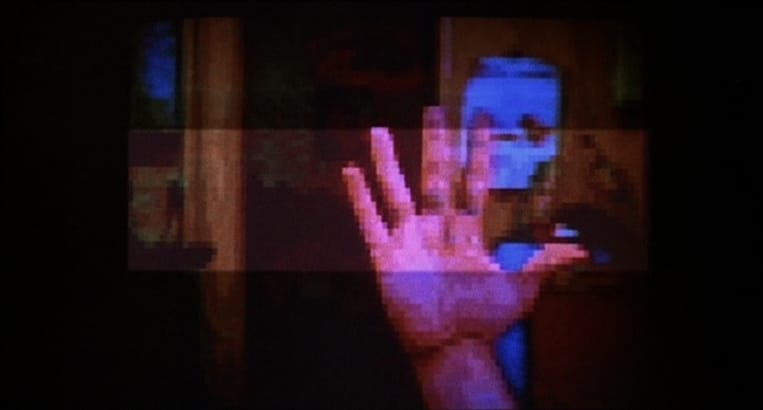
In a world with such rapid output of fast-food-style incendiary media, there is little time for the consumer to formulate a nuanced, grounded understanding of the events unfolding through the media's metaphorical representations. Furthermore, depiction (all depiction) is always a lie; not only can it not possibly show the full picture, but it has no interest in doing so. Whether it be political campaigns, managing a public figure's image, selling a product, or all of the above. Specific consumer choices themselves often have political symbolic implications through the external gaze, and what messaging the consumer intends to send by way of performativity. Representation, and by extension propaganda by way of metaphorical inflation, is inescapable, particularly in contemporary society. Even worse, propaganda is highly curated and tailored to the exact echo-chambers which people are trapped within. Within the film Videodrome, propaganda does not simply mask life, but becomes a “New flesh,” as the main character Max Renn’s body and reality quite literally become increasingly influenced by media consumption. His handgun in the film merges with his body, a vaginal-like VHS opening within his chest to more literally consume programming, which leads him to carry out the whims of those in control of “videodrome” itself. Even Marshall McLuhan himself is referenced within the character of Dr. Brian O’Blivion, who persists within the world long after his death through the use of a massive library of VHS tapes. The reality of his very life is itself an illusion, far beyond the original embodiment of the man himself. Think how, with today's advancements on this same technology, how far are we really from something like a Public figure like O’Blivion being purely fiction, as technologies like DeepFakes and AI-generated video become increasingly available and in increasingly higher fidelity?
Society killed community
Nietzsche was not “nostalgic” about the pre-industrial, or pastoral, or agrarian way of life in the sense that individuals like Rousseau may have been; he was more atavistic than uncritical of the past. Nietzsche's appreciation of such arrangements as the pre-industrial, pastoral, or agrarian way of life was not because of its “peaceful” attributes, but because of its Dionysian attributes, which stand in sharp contrast to today’s mass society. Neither Nietzsche nor I think the past could simply be copy-and-pasted into the present. Still, we use the past to criticize the present, while recognizing the past’s capacity for cruelty, which has only become exacerbated and even more sterile within mass society. We also cannot unlearn the death of God, the lack of faith in religion and the social meaning it provided, and the subsequent passive Nihilism (anomie), but we can understand what led to it.
Necessary to our survival both emotionally and materially, people were bound by the high-trust nature of these communities, because a person’s life quite literally relied on them. Our individuality was reflected to us through their gaze and distinction: you were the same as a member of a community, but you were unique because of your eccentricities within the community. In a sense, it was your sameness that resulted in your eccentricities and uniqueness flourishing and being accentuated. Today, people are pigeonholed to the point of obscurity. Mass society and pop culture sell the individual a pre-manufactured lifestyle and identity, and community with accompanying thoughts and virtues, even vices to go along with it. When the individual adopts such an identity to feel unique, they subsequently are flattened by it. Such a sad state of affairs when people are so estranged from genuine identity and meaning because of how atomized we are that we have to invent repetitive labels and self-referential words to give us any semblance of feeling like we're a part of something. When everyone is exactly like you, nobody is. Without the meaning of words, nobody's identity has any distinction. Without our more caveman-like Dionysian expression of possession, or “ours” or even “mine,” “Them” and “Me” beyond the material common ownership of things and shared reflection of self, nobody is effectively anyone. Total individualism and total collectivism are, I’d say, not only impossible, but undesirable.
-- A paranoid obsessed with the public image, Wade Cartway is the head editor and founder of the pdf zine Samizdat Free Press on Gumroad, a Neo Dadaist/Expressionist zine on the transgressive writing scene.