When the hunger comes up on that old mountain, it gives the Wolfman a name and sends it to him through the black timber of a night, in a tongue older than the good Lord ever meant a living thing to be. Whoever's name it is, man, woman, or child, won't ever walk back down out of the high country alive. Tonight, that hunger was up on the mountain again. And it always did get fed in the end.
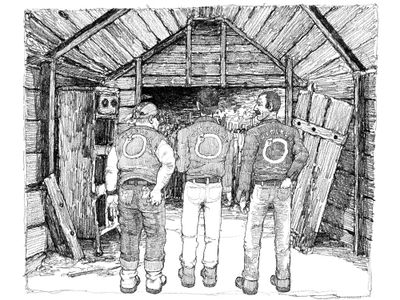
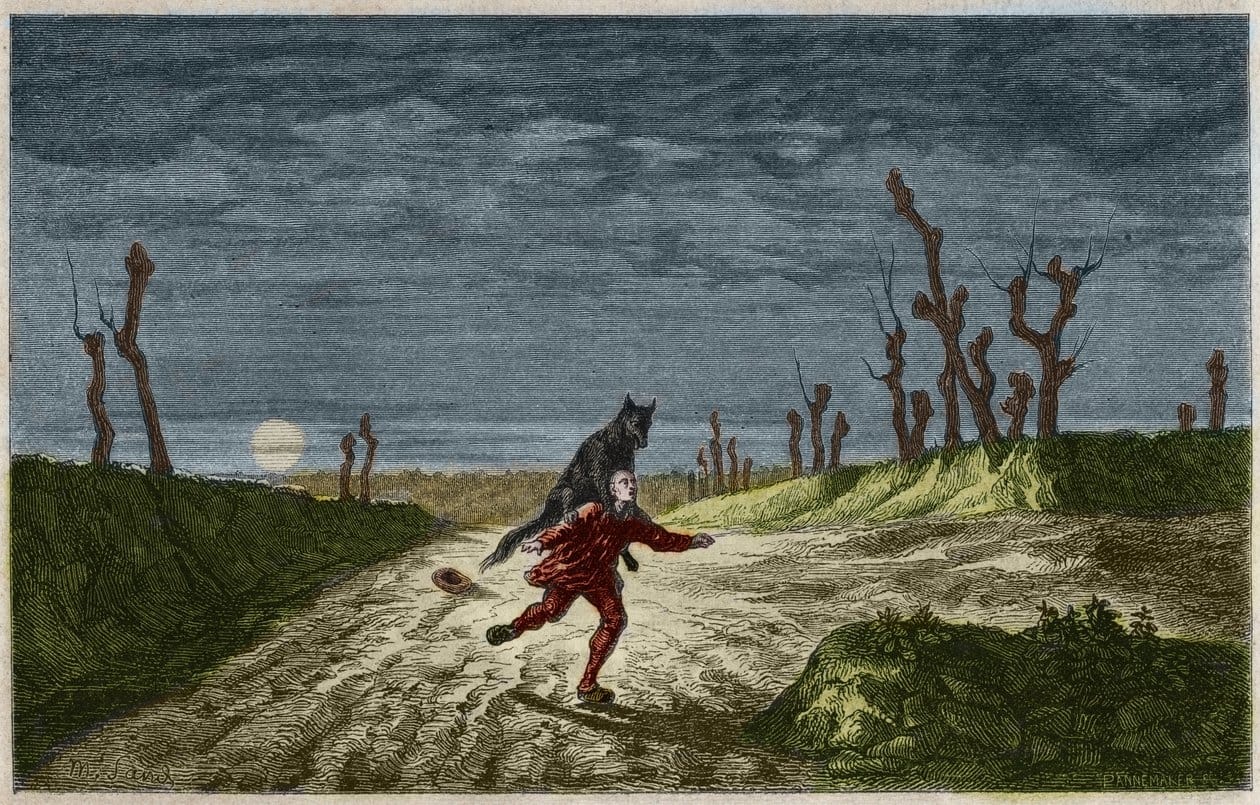
The hikers had their own name for him. The youngins, the ones who came up out of the Shenandoah hollers of a weekend with new boots and clean packs and went home with a story they would tell the rest of their lives. The Wolfman of Helltown, they called him, after the name folks once had for old Front Royal town in the valley. His name would go around their fires, one mouth to the next, the way the worst kind of story always does, the kind that gets quieter the darker it gets, and nobody wants to be the one to finish it. How he walked the high trail at night, and no man with a badge had ever so much as caught sight of him. By first light, his writing would turn up etched into the shelter walls, and he’d be gone, not a soul within ten miles to account for it. They told it like a warning and listened to it like a ghost story, and not one of them knew it was both. The hikers had it about half right, which is the most you can ask of any story. He did walk that high trail. No law had ever caught him. But he was no wolf, and he quit being a man a good while back. He was something the mountain hollowed out, the same as it does to everything up here, given enough time. It turned him loose on the ridge that night toward a stranger boy camped off by his lonesome, a campfire going, and no notion that the mountain might ever think to learn his name.
This here is the kind of place that takes from people, and anybody raised under the Blue Ridge knows the truth of it, though you won't catch many of them saying it out loud. Hikers go up healthy on a morning on a marked trail with a full waterbottle and a charged cellphone, in the green cut of Little Devils Stairs, and they take one wrong step off the dirt, and the laurel swallows them whole without so much as a snapped twig. The rangers walk their grids a week or two, maps gone soft with rain, the men in orange vests running the dogs while the helicopter beats up and down the canopy. But what comes back is never more than a boot or a jawbone or a child's sweater snagged on a briar, waiting on the one that wore it, who ain't ever coming home. The local rag prints more bullshit than this here place ever buried. They say so-and-so got lost and that they’re looking, but the people here have a different name for it, and they don't go putting that into print. Folks steer clear of the high country of an evening, and they never did need a sign nailed up along that long black ribbon of a road to tell them what they have known in their bones since they were little more than tadpoles.
These mountains are old past any counting. They’re hungry. And they never were one bit fond of the people who come climbing up onto them. The Wolfman knew the truth of it better than anyone alive in those hills, for these days the forest does its feeding through him. And every now and then, the mountain saw fit to write it down. That was the writing the hikers found and never could rightly explain. It turned up on shelter logs and cabin walls, scribbly lines in a hand gone half to ruin, warnings he could not have told you the first reason for.
ISAIAH 43:1.
I HAVE CALLED THEE BY THY NAME; THOU ART MINE.
——
MOST FOLKS RECKON THE MOUNTAIN TAKES PEOPLE.
THAT AIN'T SO.
A GRAVE AIN'T THE WORST THING WAITING UP HERE.
FIRST THING GONE IS YOUR BEARINGS. THEN YOUR GOOD SENSE. THEN THE LITTLE THINGS.
WHICH WAY HOME LIES. WHAT DAY IT IS. WHAT YOU CAME UP HERE FOR.
I HAVE STOOD IN THESE WOODS AND KNOWN SOMEBODY WAS DEAR TO ME BEYOND ALL RECKONING AND NOT BEEN ABLE TO CALL THEM BY THEIR RIGHT NAME.
THAT’S A FEARFUL FEELING.
WORSE THAN MOURNING.
AT LEAST THE DEAD KEEP THEIR NAMES.
IF EVER YOU FIND YOURSELF UP HERE AFTER DARK AND SOMETHING CALLS TO YOU FROM OFF AMONG THE TREES, DON'T ANSWER QUICK.
TAKE A MOMENT.
MAKE CERTAIN IT KNOWS YOUR NAME.
THEN MAKE CERTAIN YOU KNOW IT TOO.
He did not recollect the writing of most of them. Come morning, there the words would be, and he would stand and read them over, not knowing his own hand. Once in a great while, and only if he was sober, he’d learn something about himself the mountain hadn't meant for him to know.
The stranger boy was maybe seventeen. He had come up the Appalachian Trail out of the south that afternoon, and the Wolfman had kept to the high dark the whole way, letting him come on, for that was how the mountain wanted it. The stranger boy made his camp early at the Wayside with his back to a log wall, the young’uns always wanting something solid behind them when the night pressed in. He had a little stove hissing blue and a phone he kept raising over his head, turning it this way and that, till at last he caught a bar of signal. He did not know he had company. They never did. The Wolfman stood where the firelight quit, and the woods began, and he waited. He had learned his patience up here where the seasons move slow, and the rocks don't hurry for nothing. And in the ground, he received the boy’s name. Only thing was, the mountain had overlooked one small matter. It had taken near everything from him, but near ain't the same as all.
The young'uns ain't learned to hide themselves none. Got a way of talking from the chest, like they're trying to make themselves bigger. He had a boy once. Near enough this very age, with that same half-grown way of going, all elbows, forever caught off guard by the new length of his own arms. The name had been right there on the back of his tongue. And then the mountain reached up and took it away from him before he could get it said, same as every time before. That was the cruelest thing it ever did to him, crueler by a long mile than killing ever was. It would hand him his son's face for the space of a breath, the gap in the front teeth, the cowlick that would not lie down, however you wet it and combed it. Then it would snatch it back. His face would go sliding off again, and there would be nothing left in him but the wanting and the work he was sent to do.
For that one breath, he let himself have his son whole, which the mountain did not, as a rule, allow. And there he was. A Saturday in the bottomland, before it came between them. His boy, nine years old and standing waist-deep in the Shenandoah with a fishing rod near twice his height, hollering that he had one, he had a big one, and it was nothing but a waterlogged stick dragging the current all the while. And him trying to tell his daddy what he'd caught and not getting two words out before he had to stop and start over again, laughing too hard to finish. The kind of laugh that still reckons the world means well and doesn't know there's teeth in the dark yet. He laughed that selfsame way at some fool joke his daddy cracked the morning he left for that hike. The last one he ever got out of him. That was the part the Wolfman could never get around, standing but feet away from somebody else's boy. It wasn't the death that troubled him.
It was the life that came before it. How a kid could laugh like that, like the only thing that could go wrong was a fish getting off his line, when all the while his killer was already driving into the holler after saying grace over his God-dang supper.
He started toward the fire, through the laurel without a sound, for if he had learned one thing on this green earth, it was the quiet. And as he went, the old grief came up through him in pieces, same as it always did when a soul was waiting at the far end of a knife. These ridges had his boot prints in them already, not from a night hunt. Six months he had walked every foot of it in the daylight, sunup to sundown and back again till he lost count, his own voice wore down to nothing from hollering one name into the timber till it quit sounding like a name at all and started sounding like a word in a language nobody spoke. His boy wandered off from a church youth hike up near Compton Gap one bright, cold Saturday in October, same as he’d been wandering off after one thing or another his whole life. Only this time, he did not come back by nightfall.
Through the black of the trees, the stranger boy's fire threw up an ember glow against the trunks. That low light put him in mind of the lamp Caroline left burning all night that last winter, the two of them in the same bed and a world apart. Her plate left untouched on the same spot for five days running. The way she'd roll to face the wall when he came in. By January, she couldn't sit across a table from him, for every time she looked up, there was the boy looking back out of his face. And he could not bide a single night in that house, for the boy was in every last room of it. The coat hung on its hook by the door straight through the whole long winter, and not one of them could bring themselves to lay a hand to it.
He moved through the trees, the cold working its way up, the mountain already in him. Come the spring thaw, the ground gave their son back, tucked under a holler the searchers had stepped over a dozen times without knowing what was under their boots. What that man had done to Harlen up in them rocks he kept shut away in a place he did not open, not for the law, not for his wife, not for his own self in the worst hours of the night. That son of a bitch was still sleeping in his own bed come spring. They put him in a clean white shirt for the cameras and gave him a lawyer that cost more than most folks round here see in a year, and that was the last time anybody up in these parts used the word justice with meaning.
So one night that March, he did not so much decide as come undone. Three days without sleep and a bottle of hooch going warm in the seat beside him, he had no plan in his head at all, no idea of what he might do. The man kept a tidy house on the valley road, porch light burning, a church bulletin still on the kitchen table, for he had been a deacon thirty years and had drove that youth van up the mountain himself the morning their boy wandered off. The Wolfman had his son's fishing knife in his fist, the one with the bone handle he had cleaned a hundred bluegill with on the river, his initials still burned in where his daddy helped him. He put it into the deacon’s belly before either one of them said a word. It went in and grated on something hard, and the man folded around and made a sound like a screen door opening and closing. The Wolfman drew it back out wet and put it in again, and again, up under the ribs now, into the soft meat this time, warmth running over his own knuckles, more of it than he would have believed a body to hold. The deacon stumbled in the doorway, trying to gather his innards, and still the Wolfman crouched over him and kept on, till the deacon grabbed the blade with both hands and it laid his palms open to the bone, and the Wolfman did not stop for that either. When it was done, he sat back on his heels, soaked to the elbow, the deacon's eyes fixed on the porch ceiling, and he stayed there a good while.
Ten feet, no more. The stranger boy was wrestling with one of those freeze-dried camp suppers, cussing under his breath because up here at night, the sound of your own misfortune is better than silence.
“Hush now,” he said, not so much to the stranger boy as to whatever was listening in the trees. “It don’t hurt but the once. That’s the one truth I can give you and still keep my soul straight.”
The stranger boy's phone lit up. He pushed his supper aside and answered it on the second ring. "I know, Mama," he was saying, talking away to a woman who had no notion of the type of man who stood next to her son. "I'm being careful, I swear, Mama. I'll be home Sunday. Love you too."
Least he got to hear his mama's voice. His boy never did get that much. Then the name came to him one final time, and the Wolfman brought the knife up. The stranger boy turned his head toward the dark to listen, and the firelight found his face.
And it was Harlen's. His boy.
Every inch of him, down to the jaw not yet finished coming in. The mountain had held that name back from him all this time, and it handed it back now, here, with the knife already up.
"Harlen."
The Wolfman stopped cold.
The knife dropped to his side. His fingers came open without his say-so, and he went into the leaves. The boy scrambled to his feet and spun around, and there in the shaking firelight, he got his first good look at the Wolfman of Helltown. Just an old man on his knees in the leaves, come all apart, both hands open at his sides, the knife on the ground beside him.
The boy took one step back. Then another. His voice came out small.
"Mister. I ain't Harlen. I don't know who that is."
He ran. Headlamp swinging wild through the black, boots hammering the trail.
And the Wolfman let him go.
He let him go, and the mountain raged at him for it, the rage rising through the dirt, the name it had given him grinding around and around in his head. He stayed where he was and bore it, every bit of it, because for the first time in three long years, he had stopped the taking and sent a boy home to his mama on a Sunday.
After a while, the stove sputtered and gave out, and the fire he had built up sank to one red coal and then to gray ash, and the cold came on in close and patient, and the dark was complete.
"Harlen," he said out loud, one more time, before it could be stripped off him again. And that was enough.
Then he got up with his dead boy's name still warm in his mouth. The mountain had gone quiet, the way it always did, patient as stone. And he knew that some night soon, it would breathe him another name through the black timber.
He pulled a Bible from his pack, opened it to the first blank page he could find, and began to write:
JOB 3:3.
LET THE DAY PERISH WHEREIN I WAS BORN, AND THE NIGHT IN WHICH IT WAS SAID, THERE IS A MAN CHILD CONCEIVED.
——
UP HERE, THE GROUND DON'T FORGET.
EVERY BOOT THAT EVER WALKED THIS RIDGE
LEFT SOMETHING BEHIND IT COULDN'T NAME.
THE MOUNTAIN KEEPS WHAT THE VALLEY BURIES.
THE MOUNTAIN KEEPS WHAT THE VALLEY PRAYS OVER.
THE MOUNTAIN KEEPS WHAT A MOTHER CRIED FOR
AND A FATHER COULDN'T FIND.
DON'T COME UP HERE LOOKING FOR YOUR DEAD.
THEY AIN'T LOST.
THEY JUST BELONG TO SOMETHING OLDER.
The hum in the dirt went still, and the weight that had ridden him all those years released and gave him up to the valley, just as a flashlight cut blinding through the trees.
"Sir, this is Sergeant Briggs with the Warren County Sheriff's Office. We've had a report of an alleged assault with a deadly weapon up on the AT near the Wayside. I'm gonna need to see your hands. Drop whatever's in 'em."
-- Ashley Mangtani is a slipstream writer whose work explores ecological and social collapse, and the roles people inhabit in moments of crisis. His work appears or is forthcoming in Smokelong Quarterly, Strange Horizons, Litro, Washington Square Review, Boudin, BULL, Expat Press, Thin Skin, HAWKEYE, Mobius, Third Wednesday, Rock Salt, Neon Dystopia, APOCALYPSE CONFIDENTIAL, and others. Read more at ashleymangtani.com.