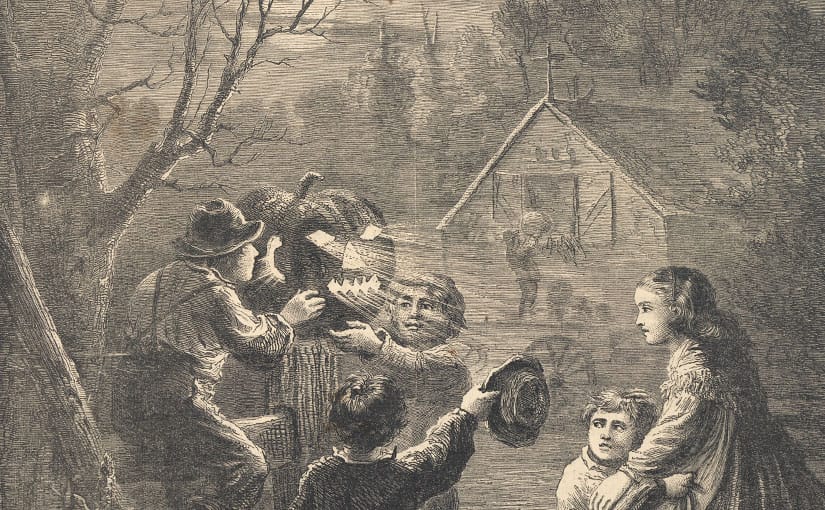
The light had already begun to fall victim to the shadows and darkness threatened to swallow the sun. I cradled my root close, fearful of extinguishing the precious life inside. My little Jack-of-the-lantern, bloodless child imbued with the spirit of a fiend, leered up at me with his mysterious grin. Constructed from turnip, tallow, and reed; the totem had been graven and sealed with a promise of fealty in exchange for protection, just as the old woman had instructed. Jack would guide me through the blackest part of the night and serve as my safeguard against the Bean Sídhe. Still, the warning of dark magic gone awry, that Jack was a trickster and known to make mischief, played in the back of my thoughts.
Light spilled from his crudely carved mouth casting a jagged smirk across the clover lined path that wound through the trees—a path that would take me to the bonfire at Tlachtga. The Hill of the Ward was the one place, where, on a night of hauntings, I might find refuge from the relentless spirit that dogged me. Samhain, the eve of the new year, the night when the door to the Otherworld would open, was nigh, and my bones ached with a desperate longing for the living and the chill of the advancing shadow of the dead.
The seer studied the scrying bowl, parsing bits of meaning from the refracting light and gentle ripples in the water tension. The woman hummed and swayed, but her fleshy lips remained firmly closed.
I had watched Étaín’s growing attentions to my sister with mounting anguish. Each smile and solicitation sending a surge of jealous rage through me. I had even begun to have fantasies of abusing Ciar’s delicate features with the steaming water from the fresh-boiled kettle and ripping her silken dark hair out in violent, bloody clumps. Between these fits of fantasy, I became moribund, sinking into a state of dark abjection.
The seer was renowned for her black arts and her ability to not only predict the future, but to also affect it. I had heard the warnings, whispers of magic gone bad, and still, I had approached her out of desperation. As I waited for the woman to deliver news of my fate my impatience roiled within me, like the threat of thunder ready to crash forth from a clouded sky. I wanted to shout at her to just get on with it, but before I could make my demand, she issued her dire prediction.
“You know already that her womb swells with life. She will bear him a child, and this will cement their marriage.”
The thunder subsided; a storm of agony resumed once more. “But are you certain the child will be born alive? There’s no hope for me then?” Of course I knew Ciar was with child, but I had hoped the water would reveal a miscarriage or perhaps a fortuitous stillbirth.
“There is always hope, but I have seen the crow, and playing with the fates often comes at a steep price. The Morrígan does not take to subversion lightly.’
I was frantic. “But can she be thwarted?”
“The question is not if the fates can be thwarted, the question is: what are you willing to sacrifice to shift her favor?”
Her words struck like lightning, igniting a spark of hope within me. I leapt to my feet, and with a wild-eyed ferocity I cried, “Everything! I will sacrifice everything!”
Each evening, I crept to my sister’s bedside and peeked through her curtain, watching the rise and fall of her ever-growing midsection with dread and fascination. The child inside was of my blood and the blood of my lover’s as well but was not mine.
The child should be mine, I thought bitterly. My name, Flann, meant blood and it felt cruel that my own flesh and blood should be the harbinger of my greatest misery.
Our affair had started not long after Étaín and Ciar had begun their handfasting period. Ciar suffered from headaches, often exacerbated by the washing fumes—work she had taken on to support us after our parent's death. Within a week of his arrival, she began to insist on sleeping alone in her own curtained bed. When she would retire early to bed in the evenings with complaints of head pain and fatigue Étaín would seek out my company. He liked to sit, the elbows of his tunic polishing the oak of the kitchen table and watch me do the evening chores in a boyish way that I found charming.
One day I’d noticed him following me intently with his eyes.
“Is something amiss?” I asked.
“Just admiring your figure. You’re much more robust than your sister. Hard to believe you both hail from the same bloodline.”
That evening, after I’d swept the floor, he held my chin in his palm and admired the flush in my cheeks. “There’s a lively pinkness to your cheeks I find becoming.”
“I suppose work agrees with me.” I responded, feeling a small thrill at his attentions. Of the two Ciar had always been considered the greater beauty. Pale and delicate, and steeped in watery essence, she was like the calla lilies that grew along the peaty bogs. No boy had ever paid me much mind.
“You will bear a man strong children someday,” he remarked while brushing a bit of dirt from the soft flesh of my cheek with his thumb. His dark eyes lingered on my lips only a moment before he bent and crushed them against his own. I was surprised by my response; I yielded to him without hesitation.
Étaín did not have a particularly handsome face but was well built in the rugged sort of way many of the local farm boys were and I enjoyed his quick smile and easy temperament. His presence felt like a breath of life, disrupting the quietly solemn atmosphere our home had taken on since the death of our parents. He was light to my sister’s dark, and I had grown tired of shivering in her gloomy shadows and craved the warmth of the sun.
Truthfully, their match was one more of convenience than love. Our land, fallow since our parent’s death, needed a strong worker to tend it, and Étaín, as one of twelve siblings, couldn't expect to inherit much land of his own. I had hoped nothing would come of their betrothal. As was local custom, if a handfasting failed to produce a viable pregnancy by a year and a day the betrothed could break the engagement, and no formal marriage would be required. If they did not have a child Étaín would then be free to marry me. But now that Ciar was pregnant the prospect of an heir seemed to have renewed his interest in his future wife, and I suspected he would go through with the marriage in order to secure an heir and full access to the land.
My sister was all that remained of my family. Ciar, older by five summers, had raised me after our parents had both died of fever. I had loved her like my own limb. I would have felt crippled if we were ever to be separated. Now I wished to be rid of her with the same intensity of feeling with which I had once revered her. That I had betrayed her and that she knew nothing of my anguish mattered not. I viewed her as one views a mother, and as such, I felt entitled to her sacrifice. That she should be content, while I suffered such immense pain seemed impossible to me.
As I drew closer to the hill the wind began to gust, working the trees into a frenzy and whipping copper bands of hair against my face in violent lashes. My flame swayed and flickered, nearly extinguishing itself in the sudden maelstrom. I cupped my hand around my lantern to steady his flame as a mournful wail echoed across the forest, breaking through the roar of the wind.
The wailing had begun on the third evening following Ciar’s death. It had started as a distant scream, icy fingers reaching out through the night and across the bog to encircle my heart. I’d looked through the window one night to see a dark-haired woman standing not far off in the distance.
After a week of the terrible shrieking, I had returned to the seer.
“It is the Bean Sídhe.” The woman declared. “Your sister is trapped between the worlds; she is restless and draws closer as Samhain approaches. If you do not take the proper precautions she may pierce the veil when it is thinnest to enact her revenge.” The old woman issued a disapproving tsk, “I instructed you to rid her of the baby, not of her life. That was clumsy and careless.”
I balked, offended by the implication. “I never meant to harm her. Her death was an accident.”
“Did you not think that killing her unborn child and stealing her betrothed constituted harm?”
“That was different.”
The woman raised her eyebrows, “Maybe, maybe not. Either way she is dead now.”
“The drugs, they were too strong.” This of course was true, or at least I thought it was true, but now I began to wonder if I hadn’t given her too much of the pennyroyal, which I had been instructed to use in a very modest dose. I had eyeballed the little portion of herb—it had seemed so meagre—and I’d added just a bit more for good measure. At first, the tonic had appeared to work as intended. Ciar had haemorrhaged and I’d carried the baby out wrapped in a bit of muslin and buried it under the hawthorn. As an unbaptized child it wouldn’t be welcome in heaven, but I hoped it might still find a home amongst the Aos Sí. Within a few days it became apparent that the haemorrhaging had no intention of letting up and I began to feel panicked. I tended to her with compresses and changed the linens hourly and still she continued to soak through them, her life ebbing out in a blood-red tide. Ciar became wan and weak as she continued to bleed, her weakness eventually progressing to fever, and then, finally, death.
Étaín at first was distraught at the loss of his child but it wasn’t long before he began to look at the issue with more pragmatism. In the days following Ciar’s passing he began to speak of our future together and proposed that he stay on to act as my guardian. He said that once I reached the age of majority the following spring, we should be married.
At first, I felt only shock, and a shaky sense of relief. I had gotten exactly what I had wished for, hadn’t I? I was rid of Ciar and now had Étaín entirely for myself. But as the days wore on and the shock started to wear off, I was overtaken by an immense sense of loss.
Étaín refused to speak of Ciar and seemed determined to move on from what he referred to as the unpleasant business of her death.
I tried to involve him in her funeral preparations, but he’d shrugged me off with a simple, “Do as you will.”
When I pressed about an inscription on her burial stone, he threw his hands up and shouted, “Must you always bother me with stupid trivialities?”
His lack of regard caused a shift in my perception, and I started to view him in a less flattering light. Suddenly he seemed not so much carefree, but lacking in sentiment.
I wondered, would he be as unaffected by my death as he had been by my sister’s? “Would you move on to another wife if I should die?” I asked him one evening as he discussed his plans for selling some of the fall harvest to purchase a plow horse.
“What strange questions you ask. A man should have a wife to bear him children and satisfy his needs; I would remarry as soon as I found a suitable wife.”
It was as I suspected. Our lovemaking had been merely a matter of convenience for him. His sweet compliments; hollow and insincere. I saw for the first time that he was an ugly man, and it struck me that the reason my sister had not wanted to share her bed with him was because she had been aware of his ugliness, even as it had eluded me. How easily my head had been turned by a few empty compliments.
That night I declined to lay with Étaín, instead curling into the alcove where my sister had slept and where her familiar scent of lavender and lye still lingered, and I wept properly for her for the first time since her death, a river of bitter tears.
The wind whipped harder and I hunkered around my flame shielding it from the gusts with my body. The sun had set behind the trees already and only the smallest sliver of light still escaped the horizon. It was nearly full darkness, my weak flame the only protection against the creeping spirits. If it went out before I could reach the bonfire at Tlachtga to relight it with the sacred flame I would be fodder for those who, tonight, would cross the threshold to roam unencumbered, seeking mischief and dark congress with the living.
Another shrill scream pierced the night. My flame, buffeted by the wind, was weakened to near extinction. I sent up a prayer to my protector.
As I reached a fork in the path a figure emerged from the shadows and crept into the circle of waning light. I drew back in apprehension, afraid my sister had finally come to do her worst. As the form drew closer, I could see it was not that of the Bean Sídhe but instead that of a young man.
He gestured to my lantern. “The wind is angry tonight. Your flame looks about to go out.”
I felt as though a strange fever had overtaken me. I shivered, at once hot and cold, and drew the lantern nearer to my chest as though the small flame might warm me. Another wail resounded through the forest sending a tremor through me.
The man must have sensed my distress because he asked, “Is something the matter?”
“It’s the Bean Sídhe. It wishes to cross the threshold, to bathe me in the darkness. I must get to the sacred bonfire before my flame goes out.”
He nodded, as though this was the response he had been expecting. “I can help you.” The young man drew closer. I could see he was handsome and felt there was something cagey, yet oddly familiar in his smile.
He had been traveling without the aid of a light. The wind was strong. I wondered if his own lantern had burnt out. “But where is your flame?”
“My flame is here.” He raised his palms and indicated the circle of light that enveloped us.
The wind in my ears was making me feel unbalanced, as though the world around me was forever tilting. I had no head for riddles. “You are being cryptic. There is only my flame here.”
He leaned casually against a tree and grinned. “You carry it, but still it is my flame,” he said, leaving me to puzzle over his strange words.
After a moment it struck me and my eyes flew to the lantern to confirm my suspicions. I realized where I had seen the smile before. “Jack?”
He made a flourish. “At your service.”
“But—”
“Your summoning. You need my protection, and I, well, I need something from you.”
The flame flickered and a shriek cut the air, turning my blood to ice. My sister drew nearer.
I was confused. I tried to part the curtain of fog that had begun to obscure my thoughts, but I couldn’t quite make sense of it. “From me? What could you possibly need from me?”
“You swore an oath of fealty in exchange for my protection. I would simply like to bind you more permanently to that oath.” Jack produced a length of twine from his pocket. “I suffer from the most unfortunate of circumstances, you see. I’m trapped in the spaces between, barred from participating in your world, or any other, unless I can bind myself to the living.”
“I am familiar with the legend.” Everyone knew the legend of Stingy Jack. Jack had tricked the Devil, reneged on a deal he’d made with him. When Jack died God had refused his soul in heaven because he’d been wicked, and as punishment for his trickery the Devil had refused him in Hell, cursing him to wander the darkness between the worlds with nothing but a single coal to light his way. “I don’t understand. But what is it you’re asking of me?”
“A union. I will help you with your problem, and in return you will grace me with a very small favor.”
“Favor?”
“In exchange for your hand, I will erase the memories of your wrongdoing. Without your memories the Bean Sídhe will no longer trouble you.” He took my hand in his, preparing to bind our two hands together.
It may seem a fair exchange, but be warned, sister, he barters with your soul. Ciar’s voice floated in on the wind like the faintest hint of lavender.
“Ciar?” I pulled my hand away and searched the darkness for my sister.
“She wears her gloom like a shroud. She would drag you down into that shroud with her so that you can both share her misery. Will you go so willingly?”
He will use you to his own ends.
Jack held out his hand to me. “She wants you to suffer. But I, I could end your pain. It would be as though it never existed.”
You must suffer your sins, sister, or we both become shades.
Tears stung my eyes. It was all her fault, and I hated her for what she’d driven me to do. Hated her for dying and leaving me with this terrible burden of conscience. If she had only filled our home with light, I might not have been so quick to seek it elsewhere. “It was you who always wanted to keep me in the shadows, Ciar. Your dreary countenance was too much to bear. Do I not deserve to live in the light?”
I lost my joy when our parents died. All the warmth of my remaining light went into my care for you, Flann. That which drew you to Étaín and that which draws you in now is a false light. There is no warmth in it. You have sinned against your blood, and you must now pass through the shadows if you are ever to enter the light.
I fell to my knees and began to weep. “But I cannot. You don’t understand. I cannot bear the darkness. I am too WEAK!”
If you seek false light, your soul will forever remain in the shadows. Atone, sister, or you damn us both.
Jack placed a soothing hand on my shoulder, then bent and whispered in my ear. His words remained reasonable, but I could detect the sharp notes of panic rising in his voice. “She thinks only of herself, her own release, not of your great suffering. Haven’t you suffered enough for her?”
I had failed to accept the full weight, and my soul had begun to fill with the rot of it, like a fruit with worms just beneath the flesh. I now understood my mistake.
“It could be as though it never happened. It’s the simplest thing, really. You need only give me your hand a moment and it will be done.” Jack held his hand towards me, beckoning for me to wade into a blissful oblivion with him.
I stood and took a step back. Ciar was no longer responsible for me, she would not extinguish the flame. I would need to do it. I held the lantern close to my face. The wind died and a pregnant quiet fell over the forest.
The devil stepped out from within the trees and stood before us, the light of the lantern reflecting in his eyes. He turned to Jack and flashed a sinister grin.
“NO!” Jack let out a howl of rage and despair. “You mustn’t!”
I blew out the flame, and the world all around was plunged into an inky darkness. The Devil’s raucous laughter split the night, resounding through the forest like the braying of a rabid goat. The night air was thick, heavy around my shoulders, and I welcomed its shadowy embrace. I set my lantern down in the soft clover and walked blindly into the darkness.
-- Jennifer Ostopovich lives in Canada and works as an editor at Hobart. Her writing has appeared in X-R-A-Y, Hobart, Burial Magazine, HAD, Maudlin House, APOCALYPSE CONFIDENTIAL, and elsewhere. Find her on social media: @jrostopovich.