Here comes a beastly summer day in Houston, Texas, July 1972. Humidity welling up as the city crosses into late morning and the heat condenses in its thick, gummy texture across the great byzantine maze of rough-cut concrete and freeway intercourse. Air saturated with the vapors of burnt gasoline and the fine particulate emissions of industrial excess. Thurman, glasses on and radio up, rides the traffic streaming in from Katy and takes the offramp onto Allen Parkway. He drives along the shoulder of Buffalo Bayou and turns off into Montrose, losing the industrial hubbub on the back of Montrose Boulevard and closing himself off from the heat by finding shelter in the neighborhood’s quieter, more residential quarters. Homes of every style and variety pass him by—craftsman, shotgun, colonial revival and midcentury modern.
He’s late coming into work. Making a habit of it lately. One of the privileges of having your own practice, losing the obligation of having to report to a senior partner, a double-edged sword like they tend to be. He pulls across the front of his single-floor home-style office and past the wooden sign reading THURMAN & STRAWN, LLP – HARRIS COUNTY CRIMINAL DEFENSE. Rounds his way around back and enters the modest parking lot behind, eases his old Cutlass into his reserved space at 10:45 A.M. on the dot. Secretaries, paralegals, and a few junior associates already at work inside, necks pink and sweaty under their thick cotton collars and the compounding pressures of pretrial deadlines.
Thurman enters his office through the back door and sets his briefcase up on his desk. Creased, battle-worn brown leather, sagging with the many years of hearings, arraignments, changes of plea, sentencings, a handful of capital trials where the DA came spoiling for a fight. Sunlight beaming in across the great oak desk and burnt-orange cowhide furniture, a healthy glare across the glass panes encasing his diplomas, bar admission certificates, state bar awards, the Texas Law Review Volume 38 & 39 mastheads and distinguished alumnus plaque. Case reporters in thick stiff volumes across his desk, tabbed and annotated with fulsome margin notes and the rough sketches of charging schemes. He unclips his briefcase and begins sorting through the contents to find his planner when he gets a call.
He picks up. Probably Pam calling with a reminder about that sentencing at 3:30.
“Yes?”
“Mr. Thurman?”
“Yes. I’m in.”
“We’ve got a prospective client here waiting to speak with you about a consultation. He’s been here since about 10:15 and said he would wait until you came in. He says he’s got to see you and nobody else. Real sweet boy.”
“Boy? Not another of these teenyboppers coming in about a possession charge is it?”
“No, sir. He looks to be, gee, maybe late twenties, early thirties.”
“He say why? Why he’s got to see me?”
“No, sir.”
“What’s this fella’s name.”
“Dean, Dean Brown.”
“Dean,” Thurman says, “Dean Brown. Don’t know a Dean. Nobody I know. He say what’s this about?”
“No, sir. He said he would only discuss things with you, something on account of how you come highly recommended and all. Says he don’t want to speak to any associates.”
“What’d you tell him about the wait?”
“That you’re on a real important call.”
Thurman thinks. Most of the time clients come in here not knowing their ass from a hole in the ground, something like “I just need a lawyer quick” on their lips, not too picky about what they get. Don’t ever get anybody but regulars coming in here asking for a partner, for Thurman.
“Tell him I’m done and will see him soon. Send him in about, say, two minutes.”
“Two minutes. Alright Mr. Thurman.”
Thurman puts the phone down and sets his briefcase behind him. He tidies up his desk and arranges one of the case reporters to look as though he’d been reading through it, opening it up to a page thick with handwritten notes and setting next to it a pen that looks like it could’ve written all that privileged work-product gumming up the margins. He straightens his tweed jacket, palms his hair, and is adjusting his tie when he hears a knock at the door.
He straightens out. “Come on in.”
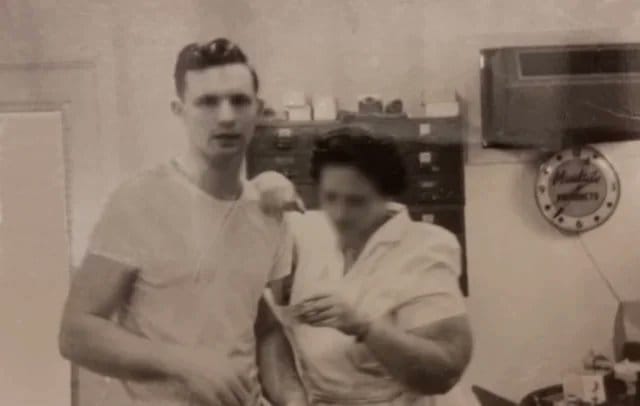
The door comes open. Thurman remembers the call excuse and wonders why he bothered setting out the reporter. Too late. Pam leads the way in, behind her a sturdy six-foot man in a white, short-sleeve cotton shirt and tan slacks, dark brown hair combed over and narrow, searching, slit-like eyes taking in the room as he follows on behind.
“Morning, Pam,” Thurman beams. “Who do we have here?” he asks as he steps around his desk and comes forward with his hand out.
“Dean Brown,” the man says, receiving Thurman’s big meaty hand and giving it as firm a shake as he can manage.
“Thurman. Jim Thurman. Pleased to meet you, Mr. Brown. Pam said you’re in here about a consultation, is that right?”
“Sure is good to meet you Mr. Thurman. That’s right, a consultation,” he says softly, mild way about him, not sure what to do with himself after releasing Thurman’s hand.
“Well, we’d be happy to fix you up. Please take a seat. Right over here,” motioning over to the two chairs in front of his desk.
Dean takes a seat. Bit of a graceless way about him, clumsy.
Thurman comes back around the desk. “Anything we can get you Mr. Brown? Some coffee? Tea maybe? Pam here wouldn’t mind fixing something for you if you’d like,” palm out towards Pam, a salesman’s smile on his face.
“Oh, no, that’s alright, I had my fill at breakfast this morning.”
“Are you sure? It’s no trouble.”
“Yes. I’m sure.”
“Alright. No trouble. Would you excuse us, Pam?”
Smiling, she bows out, leaving now, the sound of her heels clicking against the wooden floorboards. Door coming home behind her with a solid click.
Thurman settles into his seat. The leather whining underneath his thighs. Moving the case reporter out of the way, he rests his forearms on the desk, clasps his hands together and smiles. Dean smiles back.
“Well,” Thurman says, “what can I do you for, Mr. Brown? Usually I’d give you the whole song and dance about what it is we do here, but since you sought us out, and me specifically, I take it you’ve some idea of what that is.”
“Yes sir. I did some asking around, and you all come highly recommended.”
“Yes. That’s right.”
Dean shifting in his seat, clearing his throat. “Well. Thing is—Mr. Thurman? Jim?”
“Either is fine.”
“Thing is, Mr. Thurman, I’ve got me a potential legal problem.”
“Well, we are lawyers here, Mr. Brown. Legal problems are all we do. Legal solutions,” clever look on his face.
“Before we start, Mr. Thurman. I was wondering, this is all confidential, is that right? You can’t go around telling nobody about what I’m telling you, at least within the confines of this consultation here?”
“Yes. That’s right. That all applies to consultations too. Now, I should say,” a sly look drawing across Thurman’s face, “there’s an important exception there. If you’re here to tell me you’re about to commit a crime, well, then we’re in hot water, depending on what kind of crime you’re fixing to commit. But if everything is past tense, I’m obliged to keep everything you tell me confidential. Between us.”
“I see.”
“So, if we’re here to talk about certain crimes, especially violent crime, let’s keep it all past tense. You get my drift, Mr. Brown?”
“Yes sir. I think I do.”
“Good. Now—what’s this issue you’re having?”
“It’s to do with my business sir. My family business.”
“Uh huh. What do you do for work, Mr. Brown?”
“I’m an electrician now, Mr. Thurman, been at it for just about five years now. City light and power company.”
“Yes. I’m familiar.”
“But my family’s got a candy business, and I still—well, I still help out, see, here and there on the weekends, or early in the morning when deliveries come in. That’s what I’m here to see you about.”
“Candy,” Thurman says, lifting his glasses from the bridge of his nose and down to his desk, taking a handkerchief from his jacket pocket and wiping down the lenses. “Can’t say I’m too familiar, Mr. Brown. This isn’t a, say, a business issue. Contract dispute or the like. In which case you’re in the wrong place.”
“No, sir. It’s, uh,” gentle look on his face, “well, I’ve been pokin’ about, and I think it’s a criminal one. A potential criminal one. I’m not too read up on the particulars but I think I know that much.”
“Okay. Tell me more.”
“Put it like this,” Dean says, both hands gripping the arm rests of his chair, a nervous rise in his voice. “We’ve gotten to shipping candy all over the country. Not just selling it at our store like we’ve been doing. Store over in the Heights. Now we ship it all over and we get it shipped in from distributors all over. I’m also involved in the products development side of things. Testing things out.”
“Testing out candy? As in tasting it?”
“That’s right sir.”
“Hah! That’s some line of work.”
“Yes sir it is. I taste all kinds of candy. I’m in regular contact with folks all over and they ship me all their best product. Real sweet stuff.”
“So, what’s the issue?”
“Well, you see Mr. Thurman, I’ve gotten to procuring some candies from people—from some folks who source their sweets from outside the country. Mexican candies are real popular. And I know some people in Europe. Real sweet stuff.”
“You’ve procured these candies, is that right, Mr. Brown?”
“Yes sir. Procured. As in ordered in the past.”
“Right.”
“And sometimes, Mr. Thurman, well,” a quick tug at his collar.
Kid’s nervous, Thurman thinks. Can barely get it out. Seems like a sweet kid, all considered—a man, technically speaking, but there’s something stunted about him. Something that makes the word kid come to mind.
“…sometimes, I’ve been getting these candies shipped in without paying the tariffs on ’em. Duties and all that jazz. And I went and looked it up, and it said in some law book I found that candies and confections are a Schedule 1 good, and the law book had all kinds of quotas and percentage taxes and all that mess. And I realized that sometimes candies are getting shipped in—got shipped in by people who don’t do everything by the book like they should.”
“Okay. Unlawful importation of some kind.”
“Smuggling.”
“Smuggling,” Thurman says. “Well, look, Mr. Brown…”
“Yes, Mister.”
“I can’t say I know too much about this area of the law. Customs and importation is all its own territory, with very much its own rules and ways of doing things. And there might be civil penalties here instead of criminal ones depending on how The Man might decide to slice things in your case. What with the particulars.”
“The particulars.”
“That’s right. I might be better off referring you to someone who specializes. Thing is, I do things a little more square in the criminal lane. DWIs, traffic infractions, guns and drugs, domestic violence, theft, murder, child abuse—"
“Well, nobody said nothin’ about child abuse.”
“No. Just that I do it—well, the cases. I do those cases. And some child pornography now, what with how easy cameras are to get a hold of nowadays. People making pictures and trading them like they do.”
“Lordy. Some sick bastards those must be.”
“Everybody deserves a robust defense, Mr. Brown. State’s got to prove its case each and every time. I’m there to keep those folks accountable is all.”
“Yes. Sure does make sense when you put it like that, Mr. Thurman.”
“In any event. As I was saying. I think we’d be better off with me referring you to someone. Or maybe I might be able to study up and handle it myself. But you can never go wrong with a specialist. What with how complex things are getting these days.”
“Well gee, Mr. Thurman, I’d really appreciate that,” Dean looking down as he readjusts himself in his chair, some kind of evident discomfort sitting there with him, troubling the way he perches on the stiff leather seat. “But I came to you specifically because I’d, well, look, some folks told me you’re real discreet, that you don’t talk.”
“Everything’s confidential. We’ve established that.”
“Yes. Well. With my issue here, there’s other folks involved.”
“Yes. I’d reckon that’s typical in smuggling cases.”
“And other folks means there’s possibility of someone talking. And people trying to fink on each other. And I just need to make sure I have all my ducks in a row if someone were to ever start talking, which means I’d need to tell you more about my case. My particulars.”
“Yes.”
“Which means I just need someone real discreet. And I appreciate your recommendation about the referral and all, but I gots, well, I gots to trust that the lawyer I’m working with is real discreet. Like I’ve said.”
“Can I ask, Mr. Brown, who recommended me to you?”
“Old friend of mine.”
“Right.”
Dean tapping the armrest of his chair. Nervous energy about him. Can’t seem to sit straight. Odd look draws across his face, big brown eyes of his opening up as he starts to plead.
“Thing is, Mr. Thurman,” he starts. “I’m in real deep with some folks, some folks here in town and a couple in Dallas especially. It’s a whole operation up there, got roots all over. And they can be real mean. Sometimes, call it my more sober moments, I get to thinking about getting out, just sticking to my own thing. But Lord knows it ain’t that simple. I need someone real discreet to help me set myself up if something goes wrong. If things start getting out.”
“Getting out?”
“Someone who won’t go talking to the news when things get heavy.”
“If this candy importation business starts getting out,” Thurman says, nodding.
“That’s right.”
“What is it, Mr. Brown—if you’d permit me the question—what is it that might get out? Just that you’ve been importing candy? Smuggling it. Well, that would sure interest the relevant authorities, people whose job it is to be interested in that, but I’m not sure it’d be much interest to the public. Or to any reporters.”
“I beg to differ. When things get heavy, it’ll be all over. It’ll be national news.”
Thurman looking down at his leather desk cover, twiddling his thick thumbs. The sun building up heavy and bright at the windows. He looks over to them now. A car going by outside at the cool, easy pace of the mixed-use residential street, well off the beaten throughways of Westheimer, Dunlavy, Montrose Boulevard, set back in the deeper runs of green mixed in with the manicured yards and thick treetop cover. A woman in a blue cotton dress coming down the sidewalk with a stroller out front, baby somewhere inside, her face lost in the shade of a hat with a long orange visor. Her young daughter on her heels, eating at the nail of her thumb, holding her mother’s hand as she picks her careful way over the cracks. “Step on a crack, break your mother’s back,” they’d said at recess.
Dark ideas on Dean’s face. Cigarette in his mouth. The Heights, nighttime, the neighborhood still as it gets. 2:34 A.M. on the dashboard clock, (Can’t Get No) Satisfaction playing on the radio. And I try, and I try…I can’t get no! When I’m watching my TV, and a man comes on and tells me, how white my shirts can be…David Owen Brooks in his passenger seat, warm and half-empty Miller Lite can between his underage legs, Dean’s hand gripping his knee, feeling the young and hairless skin he makes him shave.
Well, he can’t be a man cause he doesn’t smoke
the same cigarettes as me!
Driving on, Brooks singing along at the chorus, voice harmonizing with Jagger’s, reaching up into that lusty and frustrated pitch. “I gots to do another,” Dean says, smoke rolling out of his nose, left hand around the wheel and cigarette burning sweetly between his right middle and index fingers. “Another one, tonight. I got myself all worked up.”
When I'm riding 'round the world
And I'm doing this and I'm signing that
And I'm trying to make some girl
Who tells me, "Baby, better come back, maybe next week"…
“We got to get cleaned up. You got blood on your shirt.” In that sweet singsong voice of his as he takes a swig of his beer. “Right there, right above your belt,” pointing at it.
“You be careful drinking that. You’re too young and you still look it. Policeman sees you and this is all over. You and me.”
A no no no…a hey hey hey! That’s what I’ll say
I can’t get no!
“Policeman,” Brooks giggles. “You think giving some kid beer is what’s going to get you in trouble?” he asks, looking into the backseat. A tarp, a toolbox, electrical tape, rolls of glossy plastic, wire, video equipment, long wooden board and a fixed-blade hunting knife rolling around on the backseat floor.
“Can’t never be too careful.”
“You’re funny. You know that, Dean?”
“Mr. Brown?”
“Yes,” Dean coming back to. “Yes sir,” he says. Reveries, old memories, fun ones. Talking about it gets him all worked up sometimes.
“I’m not sure I follow.”
“Follow? How do you mean?”
“What’s there to get out?”
“The candy business. Candy importation.”
Thurman grins. He knocks on his desk. “I’m going to shoot straight with you here, Mr. Brown,” doing a lazy finger gun with his hand, miming a playful smile on his face. “Shoot straight with you. I’m a straight shooter.”
“Yes sir.”
“I get the feeling you’re not being entirely candid with me. Now, that’s fine, and I understand why folks come in here not exactly tripping over themselves to tell me the details about potential criminal activity, other sensitive details about their personal lives. But you and me—just by way of us talking here, this being a consultation, we’ve got a very particular relationship, an attorney-client relationship. Now, whatever you’re mixed up in, if you want me to help, you need to be candid with me, and tell me more particularly what it is that’s seeming to trouble you here. Only when we’ve got the details in front of us can we work something out.”
“Yes sir.”
“It’s a two-way street. I’ve got an obligation to keep mum about whatever it is you’re mixed up in here. But you’ve also got an obligation to be clear and candid with me about what it is you’re seeking my services for. You got that?”
“Yes Mister I do.”
“Good,” a cheery affect in his voice. “Now, Mr. Brown, what is it I can help you with?”
Wind blowing heavy down the Katy Freeway, motors churning, sun splitting the sky wide open and blasting all the clouds back to the far-flung borders of the bold, blue firmament, collecting at the horizon in their pulpy cirrus streaks. Dean rides the exit into Spring Branch and turns off the service road. He moves deeper through the sappy, green, sun-dappled neighborhoods tucked behind shopping malls and great palatial supermarkets that’ve just gotten to springing up. He comes on to the single-story Post Office building nested behind the Spring Branch Public Library.
He gets out of his car and throws the door shut, feels the humidity begin to set on his skin, watches as boys on bikes sail past on the road, jeans and striped shirts, calling out to one another as they assemble themselves in diamond formation and barrel on up the street. Their voices the only ripple on the day’s still surface, the sleepy and disquiet repose that starts to set at noon when the sun starts to burn too hot and the breeze gets to whistling through the wind chimes and rustling the dry herbage.
Dean enters the Post Office building. The only customer there. A postal worker busies himself behind the counter, dumping baskets full of letters onto a long table and sorting them into piles. Dean walks over to the wall of P.O. box slots and finds his, fishes the key out of his pocket and opens it up. A look around the lobby: empty. Jots of dust floating through the sunlit interior. The quiet shuffling of letters from somewhere behind the counter. Dean reaches in and pulls out two letters and a package. Addressed to Mike Lipton, P.O. Box 7243, Spring Branch, Texas, 77080. Arm around the package and letters pressed to his chest, hiding return addresses in Dallas, Los Angeles, Chicago.
Walking back to his car. The only one in the lot. The sun even thicker now. The solitary drone of a plane overhead, a lawnmower somewhere in the indeterminate distance, cicadas sounding off from deep down in the long grass, a metal tinkle from the top of the flagpole.
He gets in his car and turns it on. Air conditioning up, radio down. Opening up the first letter, from Los Angeles. He scans the parking lot for prying eyes, finds none, starts reading.
D,
Roy sent along the newest edition of Chicken Little and a note about your contributions in particular. It’s great stuff. We think the beach area in Corpus Christi is a good backdrop. Why don’t you get back in touch with Billy and see about maybe producing some films, just the two of you? And sending us the result. An advance by money order is in the cards but it’s our understanding that Billy is more than capable of putting up the money. Whatever you spend, you’ll make it back and more. Just let us know what you think and we can shake out details at later time.
Between us, Roy can be tough to work with. We wonder about the cut he’s giving you from the magazine sales, or how much he’s telling you about overall distribution. We also wonder if it’s safe to work with him long term. He tends to burn bridges. People are more talkative when they get burned. And some funny business with that record label of his gets people sniffing around.
We’ve been thinking about building an independent client base. A smaller but more exclusive one, and potentially more lucrative. For clients with more sophisticated tastes than can be satisfied by what Roy usually supplies. Roy is mass market, and we’re thinking deluxe options. We think you would be a good fit as a producer. We are also in touch with some folks in Chicago who work in a similar lane. Did Norman ever connect you with Paske? That crowd.
Let us know.
G.S.
He stuffs the letter in his glove box and begins to open the package.
The air in Thurman’s office is stiff, stale. His patience run out. Wicker burned down to a nub. Dean just coming out from another of his reveries, another of his distracted moments.
“Mr. Brown?”
“Yes sir.”
“Well?” Thurman says, index finger in a heavy thump against his desk.
“A conspiracy.”
“A conspiracy? A conspiracy to what?” Impatience in his throat. “You need a predicate crime for a conspiracy.”
“A whole conspiracy.”
“Conspiracy law is strong here in the states, Mr. Brown. Very strong.”
“I’m all messed up.”
“Are you in danger?”
“Yes.”
“Is there a paper trail?”
“Yes Mister there is. Correspondence. Mail order forms. Index cards. Photographs, films, magazines, newsletters. It’s all over. They got people in your church, they got people in your schools, they got people in your police stations. They got people high up, all the way up the corporate ladder. In government.”
“Mr. Brown, I’m going to give you one more chance to shoot straight with me here. I shoot straight with you, you shoot straight with me. Otherwise, I need to get on with my day. What kind of crime, exactly, are we talking about here?”
-- Nick Mace is a writer, mediocre lawyer, and all-around lowlife based in the Lone Star State, around which he drifts, at random, at all times of the year. He has previously published short stories in APOCALYPSE CONFIDENTIAL and Be About It Press, and his first novel, SALOMON'S GARDEN, is forthcoming on Farthest Heaven in late 2026. You can find him on twitter @MaceSystemsCorp or hit him at his email nickmace@proton.me.